
The decision to switch business broadband UK is often driven by a need for greater reliability, faster symmetrical speeds, or more proactive customer support. In the interconnected economy of 2026, where even a few minutes of downtime can result in significant financial loss, the process of a broadband migration must be handled with surgical precision. Navigating the transition from one UK business ISP to another requires a strategic checklist to ensure your operations remain online throughout the entire change internet provider journey.
At GBIS Comms, we understand that for a British enterprise, connectivity is not just a utility—it is the lifeblood of your digital presence. Leveraging our Experience and Expertise in complex network transitions, we have developed this guide to help you navigate the nuances of the UK’s telecommunications infrastructure. Whether you are moving from traditional FTTC to a full-fibre leased line or simply seeking a more responsive connectivity partner, these steps will ensure your migration is a catalyst for growth, not a source of frustration.
1. Auditing Your Current UK Business ISP Contract
Before you commit to switch business broadband UK, the first technical step is a thorough audit of your existing agreement. Many British providers have hidden “exit fees” or specific “notice periods” that can complicate the broadband migration if not addressed early.
What to Look for in Your Audit:
- Contract End Date: Check if you are still within the “minimum term.” Switching early can incur heavy penalties unless the provider has failed to meet their Service Level Agreement (SLA).
- Notice Periods: Most UK business ISP companies require a 30-day or 90-day notice.
- Hardware Ownership: Determine if the current routers and firewalls are yours to keep or if they must be returned to the change internet provider you are leaving.
At GBIS, we often assist clients in reviewing their current contracts to identify the most cost-effective window for switching broadband providers without unnecessary financial strain.
2. Defining Your New Performance Requirements
The primary reason to switch business broadband UK is usually that your current service no longer meets your operational demands. In 2026, high-definition video conferencing, cloud-based ERP systems, and AI-driven tools require more than just “basic” bandwidth.
Critical Metrics to Evaluate:
- Symmetrical Speeds: Unlike home broadband, a business needs high upload speeds for cloud backups and VoIP clarity.
- Contention Ratios: Ensure your new UK business ISP provides a low contention ratio so your speeds don’t drop during peak business hours in the UK.
- Latency and Jitter: Essential for real-time applications. A professional connectivity partner will provide specific guarantees on these metrics.
3. The Technical Process of Broadband Migration
A common fear when businesses decide to change internet provider is the “migration gap”—the period between the old service being cut off and the new one going live.
How to Ensure Zero Downtime:
- Parallel Running: The safest way to switch business broadband UK is to have the new service installed and tested before you cancel the old one. This “overlap” period acts as a safety net.
- IP Address Management: If you host your own servers or use specific VPNs, you will need to plan for a change in Static IP addresses. A transition-focused UK business ISP like GBIS can help manage the DNS updates required to keep your services accessible.
- Hardware Integration: Ensure your internal IT team or managed service provider is ready to reconfigure your local network (LAN) to work with the new gateway.
4. Comparing UK Business ISP Options in 2026
The UK market is saturated with providers, but they are not all created equal. When you look to switch business broadband UK, you must distinguish between “resellers” and “infrastructure owners.”
- Authoritativeness (E-E-A-T): Providers who own their core network infrastructure generally offer better diagnostic capabilities and faster repair times.
- The GBIS Advantage: We focus on bespoke business connectivity that bypasses the common bottlenecks found in consumer-grade networks, providing the Authoritative support that British firms require.
5. Security During the Change Internet Provider Phase
Security is often overlooked during a broadband migration. Changing your gateway is a moment of vulnerability if not managed correctly.
- Firewall Reconfiguration: Your new UK business ISP might provide a different type of handoff. Your firewall settings must be updated to maintain your security perimeter.
- VPN Stability: Ensure that remote workers across the UK can still securely connect to the office during the switch.
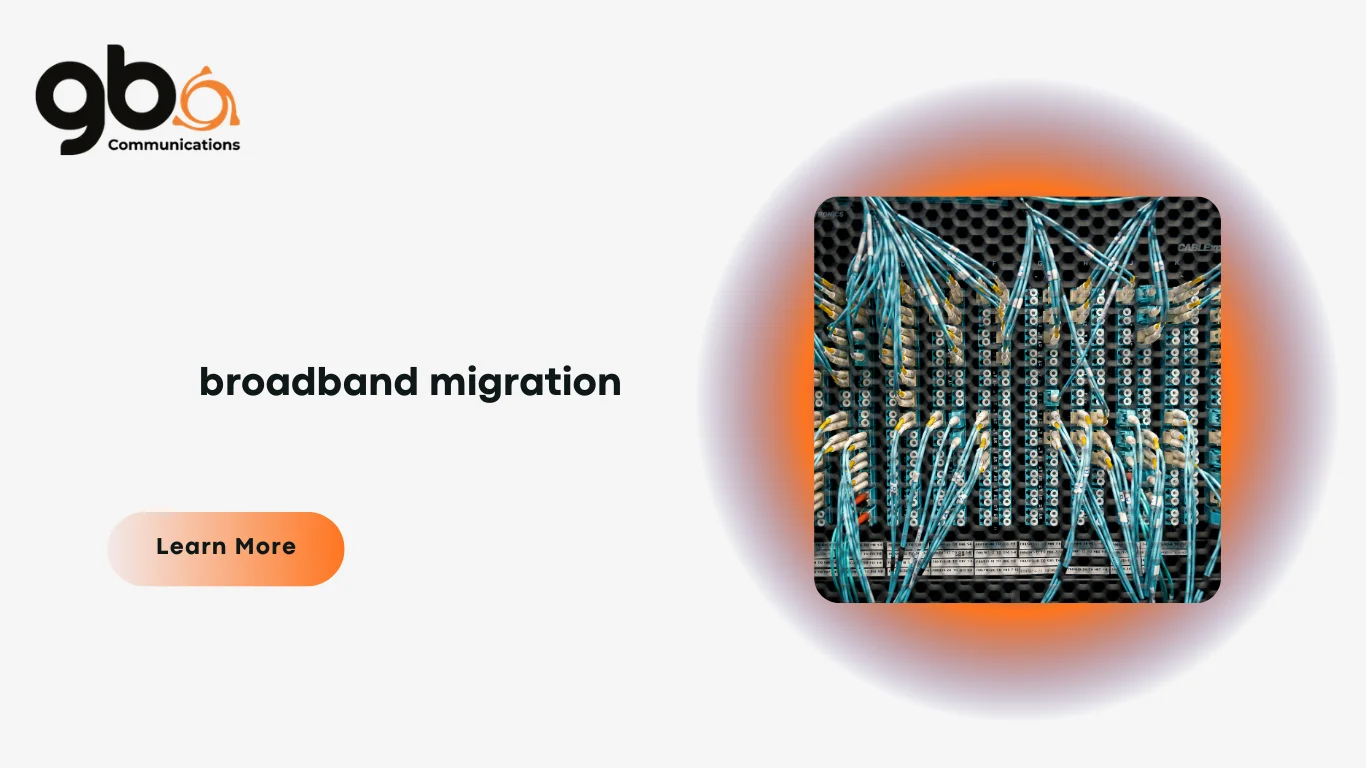
6. Managing DNS and Static IP During Broadband Migration
One of the most technical hurdles when you switch business broadband UK is the management of your Static IP addresses. For many UK firms, their IP address is linked to their mail servers, CCTV systems, or secure VPN tunnels. When you change internet provider, you will almost certainly receive a new set of IP addresses.
Technical Steps for a Smooth IP Transition:
- DNS TTL Adjustment: Before the broadband migration begins, lower the “Time to Live” (TTL) on your DNS records. This ensures that when you update your records to the new IP provided by your UK business ISP, the change propagates across the global internet in minutes rather than days.
- Firewall Rule Updates: Your internal security team must be ready to update “Allow Lists” in your firewall to reflect the new IP range.
- VPN Reconfiguration: If you have remote workers across Britain, ensure their VPN clients are updated with the new gateway address provided by GBIS Comms to avoid any loss of connectivity.
7. Fiber Technologies: Choosing the Right Path for 2026
By 2026, the UK’s copper-based “Openreach” network has largely been superseded. When you switch business broadband UK, you are likely choosing between several high-speed fibre options. Understanding these is key to your Experience and Expertise as a decision-maker.
Comparing UK Business Connectivity Options:
- FTTP (Fibre to the Premises): High-speed broadband delivered via fibre directly to your office. Excellent for SMEs looking for a cost-effective change internet provider solution.
- Dedicated Leased Lines: The “Gold Standard” for UK business ISP services. This provides an uncontended, symmetrical connection with a 100% SLA, perfect for London’s financial hubs or tech-heavy firms in Manchester.
- SOGEA: A data-only line that doesn’t require a traditional phone line, ideal for modern offices that have already moved to VoIP services.
At GBIS, we specialise in dedicated leased lines that offer the ultimate stability for businesses that cannot afford a single second of downtime during their broadband migration.
8. Avoiding the “Hidden Trap” of Consumer-Grade Support
A critical mistake when businesses switch business broadband UK is choosing a provider that offers consumer-level support for a business-level price. In the UK, a “best-efforts” fix time of 48 hours is unacceptable for a professional enterprise.
Why Expert Support Defines a UK Business ISP:
- Business-Grade SLAs: Your contract should guarantee a “fix time” (e.g., 4 or 6 hours) rather than just a “response time.”
- UK-Based Technical NOC: Access to a Network Operations Centre (NOC) based in Britain ensures that the engineers you speak to have direct control over the local infrastructure.
- Authoritativeness (E-E-A-T): At GBIS Comms, our Authoritative status in the UK market comes from our ability to provide proactive monitoring, catching potential faults before they impact your business during a broadband migration.
9. Final Checklist Before You Change Internet Provider
To ensure your broadband migration is successful, use this final checklist before signing your new contract:
- [ ] Verify the “Cease and Provide” Dates: Ensure your new UK business ISP has confirmed the installation date aligns with your current provider’s termination date.
- [ ] Test the Failover: If you are using a 4G/5G backup, test it before the switch business broadband UK takes place.
- [ ] Hardware Compatibility: Confirm that your existing routers can handle the higher speeds of the new fibre line.
- [ ] Backup Your Data: As a standard precaution, ensure all cloud backups are completed before the physical switch occurs.
10. Conclusion: Empowering Your Business with the Right Connection
The decision to switch business broadband UK is a strategic move that should result in better performance, lower latency, and superior support. In the UK’s fast-paced 2026 market, your connectivity is the foundation of your success. Whether you are seeking to change internet provider for better costs or looking for a more reliable UK business ISP, the key is careful planning and choosing a partner that understands the technicalities of broadband migration.
At GBIS Comms, we don’t just provide a cable; we provide a partnership. Our mission is to ensure that every British business we serve has the robust, high-speed infrastructure it needs to lead in its industry.
Is Your Business Ready for a Better Connection?
Don’t let outdated infrastructure slow you down. If you’re ready to experience a seamless transition to the best connectivity the UK has to offer, we are here to lead the way.